2031: Bottleneck for Canada’s 88 New F-35 Fighters
Unmasking the $73.9B Future Fighter Project: A forensic deep dive into hidden acquisition costs vs. true capability. We calculate the exact tax hit per income bracket and expose the high-stakes infrastructure and personnel timelines dictating the future of our air superiority.

THE FACTS
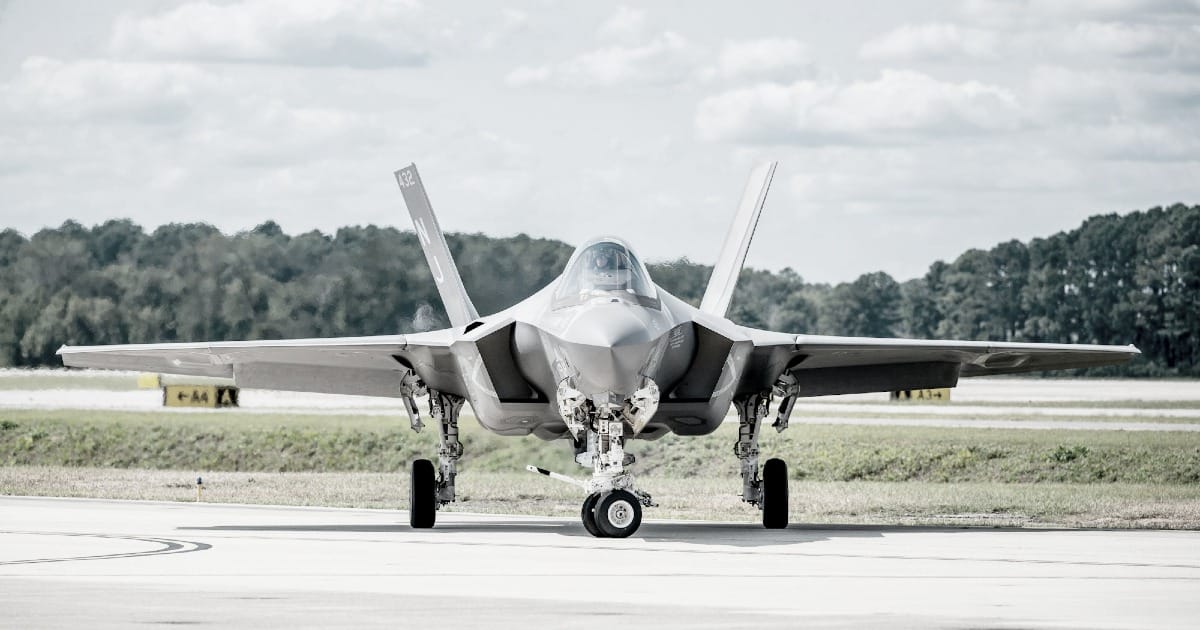
In December 2022, the Government of Canada finalized an arrangement with the United States government to acquire 88 F-35A fighter aircraft, designated by National Defence as the CF-35A, under the Future Fighter Capability Project. Delivery is planned between 2026 and 2032, with the first 8 aircraft planned to go to Luke Air Force Base in Arizona for initial pilot training, and subsequent aircraft planned to arrive in Canada starting in 2028. The arrangement includes aircraft and associated equipment, weapons, infrastructure, information technology, training, and software support, with Full Operational Capability targeted for 2033–34.
National Defence projected project costs of $19.0 billion in 2022. By 2024, National Defence’s estimate increased to $27.7 billion, and the Auditor General reported that the projection did not include other elements required for Full Operational Capability, including items the Auditor General stated would add at least $5.5 billion. The Auditor General reported construction of 2 new fighter squadron facilities in Cold Lake, Alberta, and Bagotville, Quebec, was expected to be completed only in 2031, more than 3 years behind schedule.
The Auditor General reported that a pilot shortage identified in a 2018 audit remained a risk and that readiness assessments identified insufficient departmental engineering personnel to service support equipment during the CF-18 to CF-35A transition. As of 31 March 2025, the Auditor General reported National Defence had committed $935 million to the United States government to produce the first 4 aircraft and long-lead items for a further 8 aircraft, and had spent an additional $516 million on the project, including $270 million for infrastructure design and site preparation. GlobalSecurity
TAXPAYER COST
| Income Category | Share of Tax | Cost Per Person |
|---|---|---|
| Top 10% | 54% | $12,790.38 |
| Middle 40% | 41% | $2,427.80 |
| Bottom 50% | 5% | $236.86 |
THE SPIN
Sources: National Observer, The Walrus, The Hub
The Left: Dependency and domestic capacity frame
Coverage centers on procurement dependence and the leverage created by a U.S.-centric supply chain. Costs are positioned as a function of currency exposure, long timelines, and non-optional infrastructure that follows the aircraft decision. The review is framed as a sovereignty and industrial-policy problem, where offsets, domestic production, and non-U.S. partnerships shape the decision space. Audit findings are foregrounded to keep attention on schedule, staffing, and full-capability cost items. Operational requirements are treated as inputs but not the primary organizing logic.
The Right: Interoperability and commitment frame
Coverage centers on alliance interoperability and the consequences of a mixed fleet for readiness, training, and sustainment. The F-35 decision is framed as the end-state of a competitive process and as an entry ticket to allied networks, software baselines, and shared logistics. Costs are positioned as the predictable price of high-end capability and inflation-linked procurement, with emphasis on managing risk rather than changing direction. The review is treated as a timing and credibility issue for NORAD and NATO commitments. Domestic industrial benefits are discussed through participation in supply chains rather than final assembly.
THE WORLD VIEW
The United States of America
Sources: Defense News, Los Angeles Times
U.S. coverage frames Canada’s fighter decision as an alliance-integration and industrial-base question with spillover into North American air defence planning. The review is treated as a signal about long-term alignment and procurement reliability, with attention to how any shift would affect interoperability and joint sustainment. Reporting foregrounds delivery schedules and the sequencing of training in the United States. Canadian diversification moves are interpreted through the lens of U.S. defense trade and the resilience of cross-border supply chains. Constraints emphasized include the cost of reversing course after initial commitments and the complexity of a split fleet.
The Global View
Sources: Associated Press, Politico
International coverage frames the file as part of Canada’s broader repositioning across partners under shifting trade and security conditions. The fighter review is treated as one element in a portfolio of procurement decisions tied to Arctic security, NATO readiness targets, and European industrial cooperation. Cost escalation is framed as a common procurement feature, with emphasis on currency exposure and infrastructure timelines. Canada’s role is interpreted as balancing U.S. interoperability against diversified sourcing and co-production options. Constraints emphasized include the limited speed at which air forces can generate trained crews and base infrastructure, regardless of supplier.
WHAT THIS MEANS
Will this raise my taxes soon?
Not in the near term.
The project is funded through multi-year defence appropriations rather than a dedicated levy. The near-term fiscal pressure shows up as reduced room for other federal spending or higher deficits, depending on budget choices.
Are younger Canadians paying for a system they won’t use?
No.
The delivery window runs 2026–2032, with Full Operational Capability targeted for 2033–34. That timeline places most operational use, upgrades, and sustainment costs into the period when today’s younger taxpayers will be in peak earning years.
Does this change how fast the Air Force can be ready?
Yes.
The schedule requires pilots, technicians, and engineering personnel to be trained and available while CF-18s remain in service. If personnel throughput does not match the delivery ramp, aircraft arrival does not translate into deployed capability.
Does this hit regions differently?
Yes.
Cold Lake and Bagotville are the primary infrastructure nodes, and delays there concentrate operational and construction impacts in Alberta and Quebec. Federal fiscal tradeoffs are national, but base construction and staffing pressures are locally experienced.
Does this affect Canada’s leverage with allies?
Yes.
The aircraft choice shapes interoperability and sustainment integration for NORAD and NATO planning horizons. A prolonged review or mixed fleet can shift timelines for meeting operational commitments even if headline aircraft counts remain unchanged.
THE SILENT STORY
FULL CAPABILITY CLOCK RUNS TO 2033–34
Public debate clusters around the aircraft choice and the sticker price. The binding limit is the calendar for converting delivered jets into Full Operational Capability. The constrained system is the combined pipeline of base infrastructure, trained personnel, and transition operations.
The CF-35A introduction requires parallel operation of two fleets during transition, with support equipment, software, and training demands that do not scale linearly with budget. Initial pilot training is sequenced through Luke Air Force Base in 2026–2027, while later aircraft arrive in Canada starting in 2028, tying readiness to an external training cadence and domestic absorption capacity. Infrastructure is not a background task; squadron facilities at Cold Lake and Bagotville are part of the operational system, and completion is projected only in 2031.
Personnel clocks are longer than procurement clocks. The audit record links project risk to shortages in qualified pilots and to insufficient engineering personnel needed to service support equipment while CF-18 and CF-35A requirements overlap. These roles require screening, training, and continuation hours, and throughput is limited by instructor availability, flight hours, and maintenance capacity. Money can increase recruiting incentives and contract support, but it cannot compress minimum training sequences or create experienced supervisors on demand.
The schedule also embeds integration steps that are not cash-accelerable. Software baselines, classified systems handling, and mission data processes require certification gates and partner-dependent timelines. Weapons and infrastructure elements required for Full Operational Capability sit outside the $27.7B acquisition projection identified in the audit, adding cost and time before the fleet can be fielded as planned.
This constraint is ignored because budgets reward visible commitments and counted platforms. Political timelines track announcements and signed arrangements, while readiness tracks completed facilities and trained crews. Media coverage also defaults to unit price and contract drama because those are legible without operational context.
"A fighter fleet without trained crews is a multi-billion dollar parking lot."
If the capability clock persists, Canada can accumulate delivered aircraft without proportional operational availability. The risk is a widening gap between counted platforms and usable force, with readiness represented on paper before it exists in service. Capability becomes an appearance metric until the constrained training and basing system catches up.
SOURCE LEDGER
- Department of National Defence —Canada’s acquisition of F-35 fighter jets (2024)
- Department of National Defence —Our North, Strong and Free: A Renewed Vision for Canada’s Defence (2024)
- Office of the Parliamentary Budget Officer —The Life-Cycle Cost of the F-35A Fighter Aircraft (2023/24)
- Public Services and Procurement Canada —Future Fighter Capability Project Update (2024)
- Department of National Defence —Defence Investment Plan (2024)