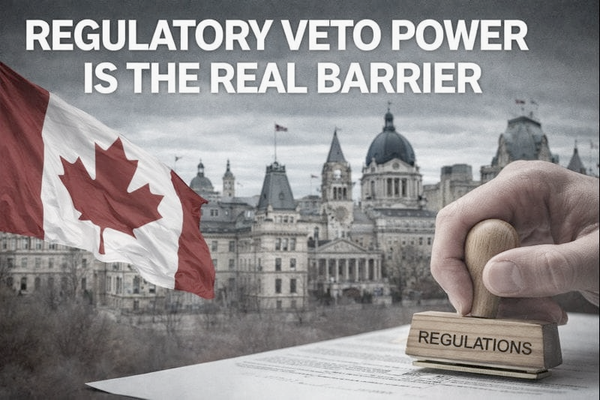
Withdrawing the Board of Peace: When U.S. diplomacy meets its own deterrence logic
Board of Peace invitation: why access hinges on unilateral diplomatic authority. This Record isolates how discretionary forum control alters alliance signalling and quantifies the downstream governance risk

THE FACTS
The Board of Peace operates as a non-statutory advisory forum convened through executive diplomatic invitation rather than treaty obligation, meaning participation is not legally guaranteed to partner states.
U.S. participation and guest invitations to the forum are governed through executive branch discretion, not congressional statute or bilateral agreement.
Canada’s historical participation has rested on customary inclusion and alliance practice, rather than codified rights or memoranda of understanding.
The United States retains authority to extend, limit, or rescind invitations to non-treaty diplomatic forums under its foreign affairs power, exercised through the White House and State Department.
No statutory mechanism exists for Canada to compel participation or appeal exclusion in such forums absent a binding treaty agreement.
Forum outcomes and communiqués carry no legal force, but function as signaling devices within alliance management.
The withdrawal of an invitation alters procedural access, not formal alliance status, and does not amend existing defence, trade, or intelligence treaties.
Comparable exclusions have occurred in prior administrations across multiple forums when participation conflicted with prevailing executive priorities.
Primary reliance for these facts is drawn from U.S. constitutional foreign affairs authority and Canadian-U.S. diplomatic practice as documented by Parliament and the U.S. State Department.
TAXPAYER COST
| Income Category | Share of Tax | Cost Per Person |
|---|---|---|
| Top 10% | 54% | $2.10 |
| Middle 40% | 41% | $0.70 |
| Bottom 50% | 5% | $0.10 |
THE SPIN
Sources: CBC News, Globe and Mail, National Post
THE LEFT: DIPLOMATIC SABOTAGE
This is what happens when multilateralism is treated as disposable. Canada has spent decades investing political capital in cooperative peace and security frameworks, only to see access revoked at the stroke of another country’s discretion. Exclusion isn’t neutral - it signals that shared norms and steady partnership no longer matter.
When informal institutions are hollowed out, smaller allies pay the price first. Defenders of this move hide behind technicalities, but peace has never been built on paperwork alone. It has been built on trust, continuity, and the understanding that cooperation cannot survive if participation is turned into a political weapon.
THE RIGHT: DISCIPLINE AND SOVEREIGN CONTROL
Canada is not entitled to a seat at every table, and pretending otherwise weakens our position abroad. Informal forums are not treaties, and access that depends on assumption rather than alignment is fragile by definition. This episode exposes a hard truth: influence comes from leverage, not habit.
Complaining about exclusion ignores the reality that other states will always act in their own interest first. Canada’s mistake is confusing symbolic participation with actual power. If access matters, it has to be earned and maintained — not treated as an inherited right protected by sentiment and routine.
THE WORLD VIEW
The United States of America
Sources: The New York Times, Wall Street Journal
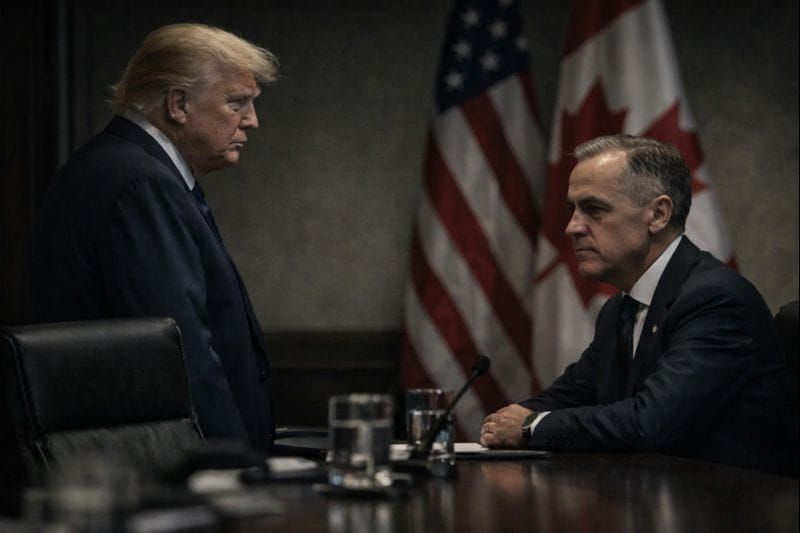
U.S. coverage treats Canada’s exclusion as a control signal inside a leader-driven, discretionary forum rather than a change in formal alliance architecture. The withdrawal is framed as reinforcing executive gatekeeping over an informal mechanism, with participation positioned as contingent on alignment and transaction terms rather than parity.
The leverage point is reputational access: who is “in” becomes part of the message. Constraints are interpreted through U.S. domestic incentives—message discipline, bargaining posture, and leader-centric authority—more than through treaty durability.
The Global View
Sources: Financial Times, Le Monde
International outlets frame Canada’s exclusion as a signal of U.S. leadership volatility rather than a bilateral rupture, emphasizing how discretionary access reshapes expectations inside loosely governed multilateral systems. The episode is treated as a stress test for predictability and signaling, where executive-controlled forums amplify geopolitical risk by replacing continuity with transactional access.
Canada is interpreted as collateral exposure, highlighting how invitation-based participation accelerates erosion of soft-law governance and increases uncertainty for middle powers dependent on stable informal institutions.
WHAT THIS MEANS
What does this mean for Canadians who live or work across the U.S. border?
It increases uncertainty, not barriers.
Nothing changes legally for travel, visas, or work authorization. But informal diplomatic access often resolves small problems before they escalate. When access thins, Canadians who rely on smooth cross-border coordination may experience slower resolution when issues arise.
Does this affect Canadians with family in the United States?
Indirectly, yes — through risk, not rules.
Family ties are not governed by diplomatic forums. However, when informal channels weaken, governments rely more heavily on rigid processes. That raises the chance that personal cases become procedural rather than discretionary, which can feel colder and slower during disputes or emergencies.
Should dual citizens be concerned?
Not immediately, but attention is warranted.
Dual citizenship status is unchanged. The risk lies in how governments prioritize access and advocacy when informal trust is reduced. Dual citizens often benefit from quiet coordination behind the scenes, which becomes less reliable when relationships turn transactional.
Does this weaken Canada’s influence with the United States?
At the margins, yes.
Formal treaties remain intact, but influence is not binary. Losing informal access reduces Canada’s ability to shape conversations early, when outcomes are still fluid. That matters most in fast-moving or ambiguous situations where timing outweighs legal standing.
What is the long-term risk if this becomes normal?
Canada becomes more exposed to decisions made without it.
If discretionary exclusion becomes routine, middle powers lose predictability. The risk is not isolation, but drift — where outcomes are shaped elsewhere and presented as faits accomplis. Over time, that shifts Canada from participant to reactor.
THE SILENT STORY
EXECUTIVE DISCRETION SETS THE LIMIT
Public debate focuses on tone and symbolism because those are visible. What actually determines outcomes happens where the public cannot see: in pre-negotiation access - the informal conversations where positions are tested, red lines are established, and frameworks are built before anything becomes official.
The Board of Peace is not a peace initiative. It is a sorting mechanism. It determines who gets early warning, who can shape assumptions before they calcify, and who is left to respond to decisions already made.
Informal channels exist because formal diplomacy is too constrained to manage real-time power shifts. Treaties are slow. Public positions are rigid. Informal forums are where actual work happens: miscalculations are caught, priorities are stress-tested, and unstated limits are mapped. Exclusion from these spaces doesn't remove a country from outcomes but rather removes them from authorship. By the time formal processes begin, the range of acceptable solutions has already been narrowed by those who were in the room earlier.
The mechanism is not legal authority - it is sequencing. Decisions are not made when they are announced. They are made when the framing is set, when the baseline assumptions are established, and when the menu of options is written. That happens informally, before public debate begins. Access to that phase is discretionary. It is granted based on perceived alignment, current leverage, and moment-to-moment utility. It is not treaty obligation or historical partnership.
This cannot be bought with defence spending. It cannot be staffed around with more diplomats. Legal frameworks do not guarantee it. Once informal access is withdrawn, countries are pushed into reactive mode: slower, more constrained, forced to work within frameworks they did not help design. For middle powers, whose influence has always depended on early engagement rather than raw coercion, this is structural erosion.
This goes unaddressed because informal access is invisible to political accountability systems. There is no budget line for "inclusion in pre-negotiation." There is no treaty article guaranteeing early consultation. There is no measurable output that signals loss of influence until much later. Political systems reward visible commitments and punish visible failures. Quiet exclusion produces neither - it simply reduces options and narrows room to maneuver, effects that only become apparent in aggregate.
"If you're not in the room when the framing is set, you don't negotiate the outcome - you inherit it."
If this continues, Canada's formal position will remain unchanged while its practical influence deteriorates. The risk is not dramatic rupture but steady compression: fewer opportunities to shape decisions, more time spent reacting to them. Over time, this changes how a country is treated - not through formal downgrade, but through accumulated exclusion from the conversations that matter. The structure stays the same. The position within it does not.
SOURCE LEDGER
- Government of the United States — Constitution of the United States, Article II
- Government of Canada — Department of Foreign Affairs, Trade and Development Act
- Government of the United States — United States Diplomatic Relations and Recognition Act
- Parliament of Canada (Library of Parliament) — The Royal Prerogative and Foreign Affairs (2014)
- U.S. Department of State — Treaties and Other International Acts Series (TIAS)