Venezuela aid meets sanctions: permits diverging from pledges
Dissecting the $115.4M Venezuela aid pledge: why sanctions permits gate which transactions move. This Record audits per-taxpayer exposure and stress-tests the permit bottleneck that money cannot bypass.


The federal government convened the International Donors’ Conference in Solidarity with Venezuelan Refugees on June 17, 2021, securing $1.5B USD in international pledges. Canada’s specific commitment totaled $115.4M CAD in humanitarian and development assistance to address the regional displacement crisis. Internal Question Period briefing notes record that $28.75M of this total was restricted to immediate humanitarian needs, with the remainder allocated to long-term integration.
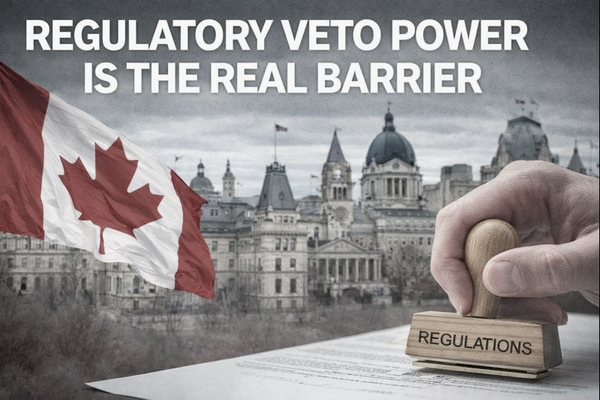
Statutory authority for financial restrictions resides in the Special Economic Measures Act, which defines the legal triggers for imposing sanctions against foreign states or persons. Under the Special Economic Measures Permit Authorization Order (SOR/2025-50), the federal government centralized permit authority under the Minister of Foreign Affairs for activities otherwise prohibited by sanctions. This order standardizes the permit process across all regulations under the Act, replacing the previous requirement for file-specific permit orders.
The Special Economic Measures (Venezuela) Regulations currently prohibit specific dealings with designated persons, necessitating ministerial permits for any transaction involving blocked assets. These ministerial permits function as an operational gate, determining the velocity at which humanitarian aid or private capital can bypass existing prohibitions. This Record utilizes Statistics Canada Table 11-10-0055-01 as the baseline for the distribution of federal tax-share used in the fiscal exposure model.
TAXPAYER COST
| Income Category | Share of Tax | Cost Per Person |
|---|---|---|
| Top 10% | 54% | $19.97 |
| Middle 40% | 41% | $3.79 |
| Bottom 50% | 5% | $0.37 |
THE SPIN
Sources: CBC News, Toronto Star, The Tyee, National Post, Toronto Sun
The Left: AID AS REPAIR FOR SYSTEMIC DISPLACEMENT
This is a predictable outcome of systemic collapse met by global indifference. The moral center is access: displaced families and marginalized host communities are absorbing costs that wealthy states externalize. Equity demands predictable funding because prevention and protection fail when resources arrive in bursts. Sanctions talk is treated as a side issue compared to human survival, and bureaucratic friction reads like political neglect. If institutions claim inclusion, they must fund integration and public health as non-optional infrastructure.
The Right: PERMITS AS A TAXPAYER-FUNDED ACCOUNTABILITY GAP
This is the classic pattern: Ottawa announces taxpayer-funded commitments, then offloads the hard part into opaque administration. The permit structure turns sanctions into a discretionary system where exemptions, paperwork, and exceptions decide outcomes behind closed doors. Entitlement logic creeps in when “urgent needs” becomes an evergreen rationale detached from measurable delivery. Bureaucracy expands while accountability thins, because the public can’t easily track which transactions were authorized, when, and for whom. In this frame, the risk is not compassion; it is incentives that normalize open-ended exposure.
THE WORLD VIEW
The United States of America
Sources: The Washington Post, The Wall Street Journal, Reuters, AP News
U.S. coverage frames Venezuela as a sanctions-and-leverage theatre where economic controls, oil flows, and regime durability intersect. The dominant strategic lens treats humanitarian channels as subordinate to enforcement credibility and regional deterrence. Canada appears as a secondary ally whose value is coordination and legitimacy rather than decisive leverage. The emphasis is on chokepoints: financial access, shipping, and the legal mechanisms that enable exceptions. Within U.S. discourse, partisan divergence appears to map onto priority ordering, maximum pressure versus managed stabilization, rather than disagreement about leverage tools.
The Global View
Sources: BBC, Financial Times, Al Jazeera, Reuters
Global coverage tends to frame Venezuela through spillover systems: migration corridors, energy markets, and institutional legitimacy signals. The strategic interest is continuity - whether governance shifts disrupt oil supply, regional stability, or multilateral coordination. Canada is interpreted as a mid-power contributor whose actions matter mainly as part of coalition alignment and aid architecture. The constraint emphasis is operational: payment rails, access permissions, and administrative sequencing that determine whether assistance moves. Long-run implications are framed as durability of sanctions regimes and the credibility of humanitarian carve-outs.
WHAT THIS MEANS
Will any of this change household costs in Canada?
Not directly.
The fiscal exposure here is small per person relative to federal spending. The household effect is indirect through general budget trade-offs rather than a visible line item. The main near-term channel is political: whether foreign aid spending is protected or reallocated under pressure. The operational gate is permits, not household demand.
Is this another bill pushed onto younger Canadians?
Yes.
Foreign assistance is financed from general revenues where younger cohorts carry longer-duration tax exposure. The cost is not concentrated in a single cohort, but the time horizon of debt servicing is. The bigger generational issue is precedent: whether emergency funding becomes recurring without clear sunset mechanics. Permits can delay delivery without reducing the announced liability.
Does this affect how services actually get delivered on the ground?
Yes.
Delivery depends on whether transactions can clear sanctions screening and bank compliance. Even when funding is pledged, partners still need payable pathways and lawful authorization for restricted transactions. Permit bottlenecks create sequencing: legal clearance first, service delivery later. Money cannot substitute for verification steps that cannot be parallelized.
Will regions in Canada feel this differently?
This reflects a trade-off.
Regions differ mainly in political salience, not direct economic incidence. Western provinces often experience higher skepticism toward foreign aid as a spending priority. Ontario and Quebec house more of the institutions that administer, contract, and compliance-screen international transactions. The Maritimes tend to experience the story through federal budget framing rather than program delivery.
Does this change Canada’s national interest position with allies?
Yes.
Sanctions credibility is partly a coordination asset with allies, and permit design affects how credible that posture is. If exemptions are slow or unclear, Canada’s leverage signal weakens even if spending rises. If exemptions are broad and untracked, the sanctions signal blurs even if enforcement remains formal. The practical national-interest variable is not rhetoric; it is administrative control over lawful exceptions.
THE SILENT STORY
PERMITS GOVERN WHAT “AID” CAN ACTUALLY DO
Public debate fixes on the headline pledge and the moral urgency of displacement. The governing force is the permit gate embedded in sanctions law. In this system, assistance is governed by which transactions can legally clear screening, not by the announced dollar figure.
The workflow is sequential. A payment pathway has to be identified, counter-parties have to be screened, and the transaction has to be assessed against prohibitions and exceptions before a partner can deploy resources. Those checks are performed by specialized compliance staff whose training is procedural and whose output is bounded by review capacity.
The legal lock-in is structural. The Special Economic Measures Act creates a ruleset where prohibitions are default, and permitted activity is either carved out in regulation or explicitly authorized by a permit. That means delivery variables cannot be parallelized: funds can be announced, but transfers cannot move until the screening and authorization steps clear.
Throughput is the hard limit. Each additional restriction or ambiguity adds verification work—identity resolution, beneficial ownership checks, and transaction mapping—inside banks and implementing partners. Money can pay more staff, but it cannot eliminate the time required for due diligence, internal sign-offs, and the ministerial decision loop when a permit is needed.
The incentive blind spot is political time. Announcements happen on a news-cycle clock, while permits and compliance operate on a risk-and-liability clock. Media attention gravitates to pledge totals because they are visible, while permit issuance and transaction clearance are largely invisible unless something breaks.
"The budget provides the fuel, but the compliance gate is the only gear that turns the wheels."
If the permit gate remains the governing force, headline pledges will continue to outpace delivered throughput. The risk is capability drift: Canada appears active through announcements while the practical pathway for delivery becomes the limiting factor. Over time, the system signals paper strength while relying on unmeasured administrative capacity to determine real-world function.
SOURCE LEDGER
- Global Affairs Canada —Canada mobilizes international donors to support Venezuelan refugees, migrants and countries in the region (2021)
- Global Affairs Canada —Canada's humanitarian response to the Venezuela crisis (2024 Edition)
- Department of Justice —Special Economic Measures Permit Authorization Order (SOR/2025-50)
- Department of Justice —Special Economic Measures Act (S.C. 1992, c. 17)
- Statistics Canada —High income tax filers in Canada, Table 11-10-0055-01 (2023)