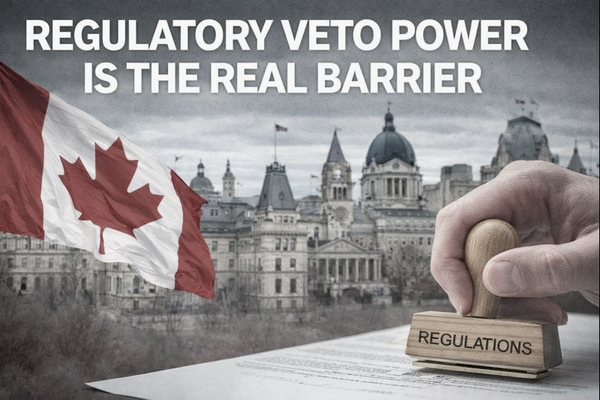
Inflating the Ukraine Support Program: how procurement friction compounds the 2029 delivery cost.
Stress-testing the $2.5B Ukraine commitment: why IMF gates, not announcements, govern cash timing. This Record quantifies per-taxpayer exposure and pinpoints the fiscal-calendar constraint inside the package.


THE FACTS
The federal government registered a $2.5 billion loan disbursement in late 2025, representing the first half of Canada’s $5 billion commitment to the G7 Extraordinary Revenue Acceleration (ERA) mechanism. This facility leverages future interest from frozen Russian sovereign assets to service a $1.5 billion debt suspension and facilitate $8.4 billion in IMF lending. Statutory authorities also prescribed a $322 million guarantee specifically for Ukrainian energy imports via the European Bank for Reconstruction and Development.
Total military assistance registered since 2022 reached $6.5 billion, though industrial production limits have sequenced deliveries through 2029. The 2025 allocation includes $835 million for armoured vehicles and ammunition, alongside a $100 million contribution to the Czech Ammunition Initiative. However, officials rescinded plans to transfer 25 light armoured vehicles in late 2025, citing undisclosed trade obligations.
The Supplementary Estimates (B), 2025–26 filed $10.8 billion in proposed voted authorities, but only $2.3 billion of this budgetary increase is allocated to the IMF Administered Account for Ukraine. The remaining balance facilitates collective bargaining adjustments and unrelated health transfers.
| Income Category | Share of Tax | Cost Per Person |
|---|---|---|
| Top 10% | 54% | $432.69 |
| Middle 40% | 41% | $82.13 |
| Bottom 50% | 5% | $8.01 |
THE SPIN
Sources: CBC News, Global News, National Post, The Globe and Mail
The Left: Systemic defence of democracy
Failing to fund Ukraine is a systemic surrender to predatory authoritarianism that threatens global equity and public health. This Record confirms Canada’s role in preventing the historical exclusion of sovereign nations from the international order through sustained, necessary investment. Skepticism toward these allocations is merely structural inertia that ignores the marginalized victims of imperialist expansion. We must prioritize the inclusion of Ukraine in the democratic alliance, as the cost of underinvestment in global security far outweighs these temporary fiscal disbursements.
The Right: Unchecked bureaucratic overreach
Ottawa is offloading massive taxpayer-funded liabilities onto future generations with zero accountability for delivery. This bloated $10.8 billion request represents irresponsible public administration and a total breakdown of fiscal incentives. The government is making political promises it cannot fulfill, as procurement bottlenecks ensure these assets will not reach the front lines for years. Pragmatic realism dictates that we stop treating these massive entitlement transfers as self-evident when they lack basic oversight and expose Canadians to compounding fiscal risk.
THE WORLD VIEW
The United States of America
Sources: The Wall Street Journal, Reuters, Newsweek
U.S. coverage frames Canada’s move as burden-sharing in a donor architecture built around IMF and World Bank leverage. Republican-aligned discourse appears to prioritize deal structure, enforceable conditions, and an endpoint tied to negotiations and security guarantees. Democratic-aligned discourse appears to prioritize alliance credibility and maintaining Ukraine’s macroeconomic function to prevent European spillover. Canada is framed as a secondary but useful contributor whose value is speed, predictability, and institutional coordination. Risk is framed as donor fatigue and conditionality failure rather than Canadian domestic politics.
The Global View
Sources: Financial Times, The Kyiv Independent, Reuters
International coverage frames the package as a financing bridge inside a wider solvency and liquidity problem rather than as a discrete aid event. Multilateral channels are treated as the main enforcement mechanism for sequencing, monitoring, and donor assurance. Canada’s role is interpreted as adding credibility to IMF program assumptions and to reconstruction financing pipelines. Constraints emphasized include review gates, debt sustainability targets, and the dependence of disbursement on verified fiscal actions. Long-run implication is framed as whether Ukraine can remain fundable without permanent exceptional measures.
WHAT THIS MEANS
The questions Canadians are actually asking
Will this change household costs in Canada this year?
Not directly.
The $2.5B package is structured through multilateral financing, debt suspension, and guarantees, which do not map to an immediate household bill. Fiscal pressure appears through federal borrowing, contingent liabilities, and future renewal decisions. The practical effect is budget room and risk capacity, not a line item on a utility statement. The constraint is parliamentary fiscal space, not public attention.
Will younger Canadians inherit this more than older Canadians?
Yes.
Debt suspensions and guarantees shift exposure into future fiscal cycles if renewed or called. The decision point moves from a single appropriation to repeated rollovers tied to external program timelines. Younger cohorts carry more of the long-run tax-base adjustment if liabilities convert into outlays. The binding variable is duration, not the announcement size.
Does this affect Canadian defence and procurement delivery?
Yes.
Canada’s $6.5B military assistance commitment runs through 2029, tying support to procurement lead times and stockpile management. Operational delivery depends on supply chains, munitions availability, and contract sequencing, none of which accelerate on political timelines. The economic package complements that by stabilizing Ukraine’s fiscal operations, not by producing equipment. The constraint is throughput in defence production and contracting.
Will the regional impact differ across Canada?
This reflects a trade-off.
Spending capacity is federal, but perceived opportunity cost is regional because infrastructure, health delivery, and affordability pressures vary by province. Regions with defence industry and port logistics may see contract and movement effects, while others primarily see fiscal narrative impact. The debate will concentrate where federal fiscal room is already politically contested. The constraint is the distribution of domestic pressures, not the existence of the commitment.
Does this change Canada’s standing with allies and rivals?
Yes.
Allies interpret structured financing as credibility inside multilateral enforcement systems, not as symbolic support. Rivals interpret it as Canada staying aligned with coalition financing and sanctions architecture. The reputational effect depends on renewal behaviour and compliance with multilateral conditions, not on a single pledge. The constraint is consistency over multiple fiscal years.
THE SILENT STORY
IMF GATES SET THE CASH CLOCK
Public debate focuses on solidarity signals and headline totals. The limiting factor is multilateral sequencing: cash moves only when review gates clear. The constrained system is the IMF: World Bank pipeline that converts donor commitments into timed disbursements and contingent exposure.
IMF-linked support is not a single transfer; it is a sequence of conditions, verifications, and approvals that determine when funds can flow. Guarantees operate on a separate track: they create exposure now, but only convert into cash cost if a call event occurs. Debt suspension is time-scoped by fiscal year, meaning renewal decisions recur even if the conflict timeline does not.
Training timelines and procurement lead times do not compress to match a news cycle. Military assistance deliveries depend on stockpile management, production capacity, and contract sequencing. Reconstruction financing depends on project pipelines, eligibility, and institution-administered controls that are designed to slow disbursement until compliance is documented.
Budget cycles reward visible commitments, while review gates are procedural and low-visibility. Procurement incentives reward announcements of totals, while delivery clocks sit in suppliers and auditors. Media visibility bias centres the pledge, not the gate.
"Money is poured into a funnel with a narrow neck."
If the constraint persists, public expectations will track pledge totals while operational reality tracks review cadence and fiscal-year boundaries. The risk is capability on paper that cannot be scheduled into real cash flow. The package can remain politically “active” while disbursement remains procedurally gated.
SOURCE LEDGER
- Office of the Prime Minister —Prime Minister announces new support for a just and lasting peace (2025)
- Treasury Board of Canada Secretariat —Supplementary Estimates (B), 2025–26 (2025)
- Global Affairs Canada —Agreement on security cooperation between Canada and Ukraine (2024)
- Statistics Canada —Canadian military support to Ukraine (2025)
- Global Affairs Canada —Economic, humanitarian and development assistance in response to the crisis in Ukraine (2025)