Cabinet exit vs. Kyiv role: accountability is diverging across borders
Stress-testing Canada’s Ukraine reconstruction posture: why authority follows appointment, not intention. This Record isolates where responsibility, funding, and accountability separate when a former cabinet minister takes a foreign advisory role.

THE FACTS
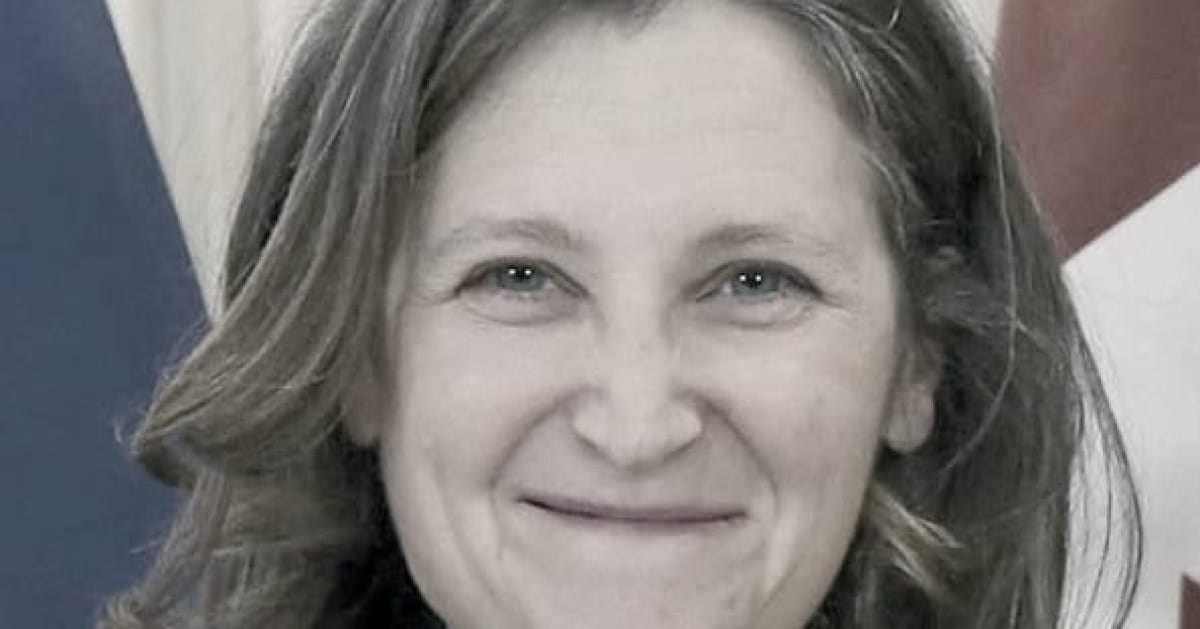
On January 5, 2026, the President of Ukraine appointed Chrystia Freeland as an external economic adviser to lead reconstruction planning. The Ukrainian presidential decree specifies that this role is situated outside the formal cabinet structure and carries no executive or statutory authority within the Ukrainian government. This appointment followed Freeland's service as Canada’s Special Representative for Ukraine’s Reconstruction, a position previously mandated by the Government of Canada.
The Prime Minister’s Office confirmed that Freeland resigned from all cabinet and caucus responsibilities prior to accepting the international advisory post. The official statement records that she no longer holds decision-making authority over Canadian fiscal or foreign policy. Global Affairs Canada maintains that federal departments continue to administer appropriated aid and sanctions policy independently of the former minister's current advisory activities.
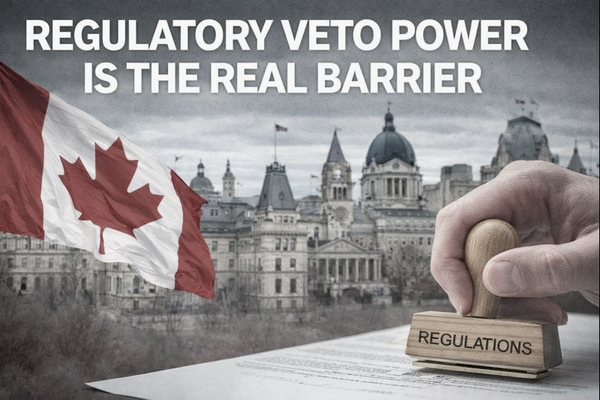
The Conflict of Interest Act prescribes specific post-employment restrictions for former public office holders regarding lobbying and the use of "insider" information. However, the Act provides no oversight authority over foreign governments that employ former Canadian ministers.
| Domain | Exposure | What Canadians Bear |
|---|---|---|
| Budget Authority | None | No appropriation is triggered by the appointment itself. |
| Policy Influence | High | Influence can operate through access and expertise without a mandate. |
| Oversight | None | No parliamentary review mechanism attaches to a foreign advisory role. |
| Reporting | Low | Public visibility depends on voluntary disclosure, not statutory requirements. |
| Duration | Undefined | End date is set by the foreign appointing authority, not Canadian law. |
| Reputational Risk | High | Canada can be associated with outcomes it cannot audit or direct. |
THE SPIN
Sources: CBC News, Globe and Mail, National Post
The Left: INTERNATIONAL SOLIDARITY ABOVE DOMESTIC FORMALISM
From this frame, Freeland’s appointment is continuity, not controversy. Expertise, relationships, and moral clarity are treated as scarce assets that must move where they are needed most. Formal Canadian roles are secondary to defending democratic systems under attack. Ethics criticism is dismissed as parochial process anxiety that ignores the scale of human and institutional collapse Ukraine faces. In this logic, credibility comes from action, not titles.
The Right: FOREIGN ADVISING WITHOUT DOMESTIC ACCOUNTABILITY
This frame treats the appointment as governance leakage. A former deputy prime minister advising a foreign government collapses lines of responsibility while leaving Canadian voters without recourse. Ottawa shed authority without shedding influence, creating ambiguity over whose interests are being advanced. Ethics rules were designed for cooling-off periods, not real-time geopolitical consulting. From this view, symbolism substitutes for accountability, and clarity is the first casualty.
THE WORLD VIEW
The United States of America
Sources: Wall Street Journal, Reuters
U.S. coverage frames the move as alliance reinforcement through informal channels. Freeland is interpreted as a trusted transatlantic actor whose presence signals policy continuity regardless of office. Strategic focus remains on reconstruction governance, donor coordination, and insulation from corruption risk. Canada is viewed as exporting expertise rather than capital, reinforcing alignment without expanding U.S. obligations.
The Global View
Sources: Financial Times, The Guardian
Global outlets frame the appointment as a hybrid governance model emerging from prolonged war. Advisory roles are treated as substitutes for formal multilateral capacity that has proven slow. Canada’s role is interpreted as reputational rather than fiscal, trading influence for flexibility. Long-term implications focus on precedent: blurred lines between national office, expertise, and international authority.
WHAT THIS MEANS
Is my tax money still under the same level of Canadian oversight?
No.
While Global Affairs Canada still manages the funds, the shift of a key decision-maker to a foreign advisory role means the "inside track" on how those funds are prioritized is no longer subject to the same Canadian ethics audits or parliamentary questioning. This Record shows that once a minister leaves, the "oversight leash" unclips at the border.
Is this a normal post-ministerial move?
No.
Former ministers usually transition into domestic or private roles. Advising a foreign government during an active conflict is atypical. The novelty is the jurisdictional split, not the resignation itself. Oversight mechanisms are limited.
Does this set a precedent for other ministers to take foreign roles?
Yes.
Because the Conflict of Interest Act has no power over foreign governments, it creates a "revolving door" that only spins outward. This means Canada may continue to export its highest-level expertise to other nations without any way to ensure that Canadian interests remain the primary focus of those individuals' work.
Does this make Canada look more or less influential on the world stage?
This reflects a trade-off.
On the surface, having a Canadian in a top Ukrainian role signals deep partnership and high-level influence. However, because that person no longer answers to the Canadian Parliament, Canada has traded "official control" for "unofficial access," making our national influence more fragile and less transparent.
Does this set a precedent for other ministers to take foreign roles?
Yes.
Because the Conflict of Interest Act has no power over foreign governments, it creates a "revolving door" that only spins outward. This means Canada may continue to export its highest-level expertise to other nations without any way to ensure that Canadian interests remain the primary focus of those individuals' work.
THE SILENT STORY
THE ETHICS LEASH ENDS AT THE BORDER
Public debate focuses on personal loyalty, political optics, or whether a former minister is "helping" a friend. The real limit isn't a lack of trust; it is a lack of legal reach. The constrained system is the Conflict of Interest Act, which was built to watch people inside Canada, not to follow them when they go to work for a foreign government.
Think of Canada’s ethics rules like a security tether in a retail store. It works perfectly as long as the person stays in the building. But the law has a "blind spot": it doesn't assign anyone to watch what happens when a former minister sits in a boardroom in Kyiv or any other foreign capital. Because this new role is "external" and "advisory," there are no official Canadian reports, no public audits, and no way for a Canadian court to see what is being discussed.
This creates a "one-way door." Information and influence can flow out of Canada through a person’s experience, but accountability cannot follow them back in. Even if the government wanted to "monitor" the situation, they lack the legal "hands" to do it. Money cannot fix this, and more staff cannot fix this, because the law simply stops at the shoreline.
We ignore this because the "revolving door" between governments is usually treated as a matter of "good vibes" or "strong alliances." We track the announcement of the new job, but we don’t track the evaporation of Canadian oversight. The system assumes that because we are allies, the rules don't need to follow the person.
"Authority has borders, influence does not"
If this "advisory" model becomes the new standard for former ministers, Canada’s global influence will rely entirely on the honour system. The risk is that we appear to have an "official" presence in foreign reconstruction, but we have actually traded institutional control for personal access. Over time, this makes Canada’s foreign policy look like a series of handshakes rather than a set of predictable, transparent rules.
SOURCE LEDGER
- President of Ukraine — Official Decrees (2026)
- Prime Minister of Canada — Statements and Messages (2026)
- Global Affairs Canada — Canada appoints Special Representative for Ukraine’s Reconstruction (2023)
- Department of Justice — Conflict of Interest Act (S.C. 2006, c. 9, s. 2)
- Statistics Canada — High income tax filers in Canada, Table 11-10-0055-01 (2025)