Bleeding $800M through delay: How administrative friction is inflating pharmacare costs
Auditing the $1.5B federal pharmacare launch: why national coverage depends on provincial systems. This Record isolates delivery authority, timelines, and per-taxpayer exposure.


THE FACTS
The Pharmacare Act received Royal Assent on October 10, 2024. The Act established a single-payer framework limited to contraception and diabetes medications. The Parliamentary Budget Officer estimated the initial phase would increase federal program spending by $1.9 billion over five years. Section 6 of the Act conditions federal payments on bilateral agreements requiring provinces to provide first-dollar coverage at the pharmacy counter.
As of January 2026, four jurisdictions had signed active federal pharmacare funding agreements. Those agreements collectively covered approximately 17% of the Canadian population. The 2025–26 Health Canada Departmental Plan allocated $1.5 billion for pharmacare implementation. The Parliamentary Budget Officer identified higher gross program costs prior to cost recovery from existing public and private drug plans.
Total health expenditures in Canada were projected at $399 billion in 2025. Public drug plan spending increased by 7.4% year over year. Medications costing more than $10,000 annually were used by approximately 3% of beneficiaries. Those medications accounted for more than one-third of total public pharmaceutical expenditures. The Canadian Drug Agency was mandated to develop a national formulary and coordinate bulk purchasing.
TAXPAYER COST
| Income Category | Share of Tax | Cost Per Person |
|---|---|---|
|
Top 10%
|
54% | $32.88 |
|
Middle 40%
|
41% | $6.24 |
|
Bottom 50%
|
5% | $0.61 |
THE SPIN
Sources: CBC, Toronto Star, National Post
The Left: Delayed care is systemic exclusion
Pharmacare is framed as a correction to systemic exclusion embedded in fragmented provincial drug coverage. Delays are attributed to decades of underinvestment and political neglect that left marginalized populations rationing medication. Provincial variation is treated as an inherited inequity, not a legitimate constraint. Expansion is positioned as a public health necessity, with cost and administration dismissed as secondary to access. Resistance is framed as protecting private insurance markets at the expense of equity.
The Right: Another open-ended federal entitlement
Pharmacare is cast as a taxpayer-funded entitlement layered onto already strained health systems. Ottawa is blamed for bypassing accountability by offloading delivery to provinces while claiming political credit. Cost growth and unclear eligibility are treated as inevitable once federal promises detach from operational control. Equity language is dismissed as rhetorical cover for bureaucratic expansion. Skepticism is framed as fiscal realism protecting taxpayers from indefinite liabilities.
THE WORLD VIEW
The United States of America
Sources: New York Times, Wall Street Journal
U.S. coverage frames Canadian pharmacare as a state-led drug purchasing expansion with implications for pharmaceutical pricing and cross-border reference pricing. Democratic-aligned commentary interprets the move as reinforcing public bargaining power. Republican-aligned outlets emphasize market distortion risks. Canada is positioned as a policy laboratory affecting North American drug revenue models and supply negotiations.
The Global View
Sources: Financial Times, The Economist
Global outlets frame the policy through health system sustainability and fiscal coordination lenses. Canada is interpreted as incrementally expanding social insurance while preserving decentralized delivery. Attention centres on whether limited-scope pharmacare scales nationally or remains capped. Long-term implications are framed around cost containment and federal–subnational fiscal alignment.
WHAT THIS MEANS
Will household drug costs drop soon?
No, not anytime soon.
Coverage depends on provincial agreements and rollout timelines. Existing private plans may continue to pay first. Savings vary by eligibility and location.
Does this shift costs to younger Canadians?
Yes.
Funding comes from general revenues. Benefits concentrate on specific patient groups. Younger cohorts finance through taxes before broad coverage.
Will pharmacies see operational changes?
Possibly, but not directly.
Claims processing follows provincial systems. Formularies may adjust. Administrative processes remain jurisdiction-specific.
Will regions see different access?
Yes.
Provinces control participation and design. Coverage varies by statute. Regional divergence persists.
Does this affect Canada’s global standing?
This reflects a trade-off.
Expanded coverage signals social insurance growth. Fiscal coordination risks remain visible. International perception depends on scalability.
THE SILENT STORY
JURISDICTIONAL FORMULARY LOCKS PREVENT NATIONAL SCALABILITY
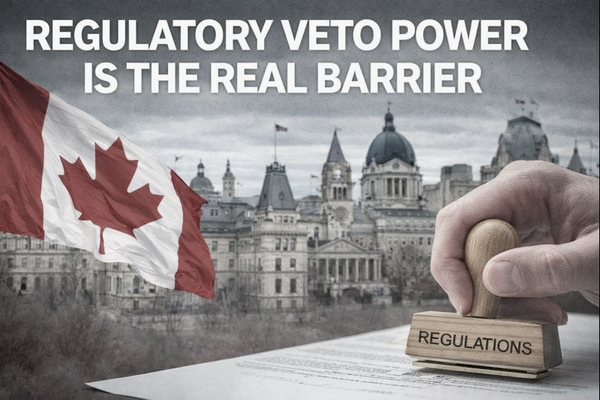
Public debate focuses on the$1.9 billion federal allocation and the promise of "universal" drug coverage for diabetes and contraception. The real limiting factor is the statutory authority of provincial health ministries to determine their own drug formularies and eligibility criteria. This creates a "veto point" where federal funding cannot bypass provincial administrative structures.
The constrained system operates through 13 separate public drug plan administrators, each governed by unique provincial health insurance statutes. While thePharmacare Act provides a federal framework, it lacks the legal mechanism to compel a province to adopt a specific list of medicines. Each province must manually align its proprietary "formulary" list with federal standards, a process involving clinical review committees and long-term procurement contracts that operate on independent multi-year cycles.
Money alone cannot accelerate these technical and legislative handoffs. For provinces like Alberta and Quebec, which have opted out or demanded "unfettered" funding, the constraint is jurisdictional rather than fiscal. The requirement for bilateral negotiation ensures that delivery is sequential and fragmented, rather than simultaneous and national.
Political timelines reward the announcement of "universal" goals, but the administrative reality is one of "conditional participation." Media coverage often conflates federal legislation with national implementation, ignoring the administrative friction of 13 separate claims-processing systems.
"The federal government buys the medicine, but the provinces own the pharmacy."
If this constraint persists, the risk is a permanent "postcode lottery" for drug access. Instead of a single-payer national system, Canada remains locked in a patchwork of inter-jurisdictional transfers. The result is a paper strength of "universal coverage" that fails to deliver a uniform standard of care to 82% of the population currently excluded from bilateral deals.
SOURCE LEDGER
• Parliament of Canada — Bill C-64, An Act respecting pharmacare (2024)
• Department of Finance Canada — Budget 2024 (2024)
• Statistics Canada — Table 11-10-0054-01: Income tax statistics by income bracket
• Canadian Institute for Health Information —Prescribed Drug Spending in Canada — Series