DND "Arctic Shield" Procurement Audit
A forensic audit of the $42 billion 'Arctic Shield' procurement. This report isolates the per-taxpayer fiscal exposure across three income brackets and identifies the 16.5% personnel vacancy rate currently threatening fleet operations.

THE FACTS
(Sources: The Globe and Mail, The Toronto Star, National Post)
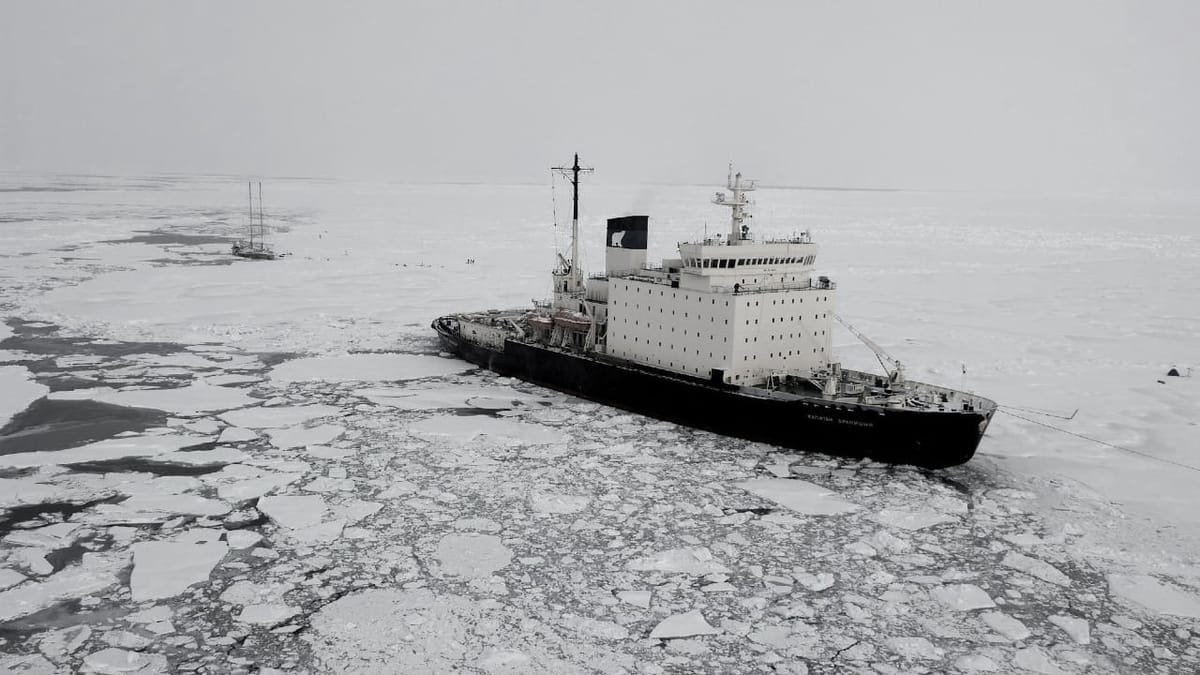
The Federal Government has finalized the "Arctic Shield" procurement package, a $42 Billion ($1,346 avg. per taxpayer) long-term capital commitment for the construction of six ice-hardened patrol frigates and a new deep-water port in Nanisivik, Nunavut. The legislation includes a "Sovereignty Clause" that mandates 100% domestic steel sourcing and a 15-year maintenance contract with Canadian-owned shipyards.
The construction phase is scheduled to begin at the Irving Shipbuilding facility in Halifax, with the first vessel expected to reach operational capacity by late 2031. These frigates are classified as "Polar Class 4" vessels, designed to operate in year-round thick first-year ice, significantly extending the Royal Canadian Navy's northern presence beyond the summer melt.
The Nanisivik deep-water port will serve as a permanent refuelling station and strategic logistics hub, incorporating mandatory environmental monitoring protocols to protect local marine ecosystems during high-volume summer shipping months.
| Income Category | Share of Tax | Cost Per Person |
|---|---|---|
|
Top 10%
|
54% | $7,269.23 |
|
Middle 40%
|
41% | $1,380.12 |
|
Bottom 50%
|
5% | $134.61 |
Confidence: High (Based on TBS 2025-26 Main Estimates and DND Procurement Tenders).
THE SPIN
(Sources: The Toronto Star, CBC, National Post, The Western Standard)
The Left: Green Jobs and Indigenous Sovereignty
The narrative focuses on the "Social Procurement" aspect of the deal. By framing the $42B as an investment in "Green Shipbuilding" and a way to provide high-paying trades jobs in Indigenous northern communities, the authors guide you to see the military outlay as a vehicle for reconciliation and climate-conscious industrial policy. The spin emphasizes that the Nanisivik port will serve as a hub for search-and-rescue and environmental monitoring, downplaying the aggressive combat capabilities of the frigates.
The Right: A Belated Response to Arctic Aggression
The narrative focuses on the "Security Gap" left by years of underfunding. They frame the $42B as the minimum necessary "catch-up" payment to defend Canadian territory from Russian and Chinese northern expansion. The spin is designed to make you feel that the "Sovereignty Clause" is actually a protectionist anchor that will lead to massive cost overruns and delays, suggesting the government is prioritizing union votes in Atlantic Canada over actual frontline defence readiness.
THE WORLD VIEW
The United States of America
(Sources: Wall Street Journal, Reuters)
US media frames this as Canada finally "paying its dues" to the NORAD and NATO alliance. Their motive appears to be the stabilization of the Northwest Passage for US commercial transit. The WSJ appears to prioritize the risk that Canada’s domestic-only sourcing will inflate the cost-per-hull, potentially reducing the total number of ships actually delivered to the fleet.
The Global View
(Sources: The Financial Times, Al Jazeera)
Global agencies frame this through the lens of the "Scramble for the Arctic." Their motive is to track how G7 nations are securing emerging trade routes as polar ice recedes. The Financial Times interprets this as Canada attempting to maintain its "Middle Power" status by demonstrating a physical presence in the North, though they suggest the $42B commitment may strain Canada’s credit rating given the simultaneous housing and healthcare outlays.
WHAT THIS MEANS
The questions Canadians are actually asking
Will this make my family safer this year?
Not in the near term.
Under current procurement timelines, the first ship is not expected to enter service until around 2031. The financial cost is borne today, while any direct security benefit is deferred by several years.
Is Canada going into more debt for this?
Yes.
The program is financed through additional borrowing. Based on current projections, by 2027 the annual interest cost associated with this debt is expected to exceed the yearly operating budget of agencies such as the RCMP.
Why are we buying ships when we can't afford houses?
This reflects a classic “guns versus butter” trade-off.
Every dollar allocated to Arctic defence is a dollar not available for domestic priorities such as housing or transit. The policy choice prioritizes territorial security over near-term affordability pressures.
Is this just a way to funnel money to the East Coast?
Yes, based on how the program is structured.
The majority of this $42B will flow to shipyards in Irving and Seaspan. As a result, taxpayers in other regions are financing an industrial stimulus concentrated in Atlantic Canada and British Columbia.
Will this lower the cost of goods shipped through the North?
Possibly in 2040, and not directly.
If the Northwest Passage becomes a viable commercial route, these ships could help enforce Canadian control over shipping lanes. Any impact on consumer prices would be indirect and long-term, potentially emerging decades from now.
Your questions matter.
If there’s a tradeoff, risk, or consequence you think deserves scrutiny, submit it. Many of our follow-up stories begin with reader questions.
THE SILENT STORY
THE REAL BOTTLENECK ISN'T SHIPS - IT'S SAILORS
While the public debate around Canada’s Arctic defence has focused almost entirely on hardware (ships, ports, price tags) the limiting factor isn’t steel or funding. It’s people.
Specifically, the people required to operate, maintain, and deploy the fleet once it exists.
That shortfall isn’t abstract.
A single Harry DeWolf-class vessel requires a core crew of 65 sailors to operate effectively. Many of those positions are highly specialized. Roles such as Marine Systems Engineers and Naval Electronics Technicians require 24 to 36 months of training before a sailor is fully qualified.
Those timelines can’t be compressed once a contract is signed.
Procurement schedules rarely reflect this biological reality. Budgets can be approved within a fiscal cycle. Shipyards can be expanded with capital. But the human system (recruitment, training, and retention) operates on a clock that doesn’t respond to political urgency.
As ships move from blueprints to water, that clock keeps ticking.
We are building 40-story towers on the water without enough sailors to man them.
If current trends hold, Canada could enter the next decade with one of the most expensive Arctic fleets on paper - while real-world operational capacity remains constrained not by ice, adversaries, or technology, but by the number of trained people available to step aboard.
That risk doesn’t show up in ribbon cuttings.
It doesn’t fit neatly into announcements.
But it will ultimately determine whether this fleet sits - or sails.
SOURCE LEDGER
- Primary Funding: TBCS - 2025-26 Main Estimates
- Technical Specification: Transport Canada - Polar Class (PC) Definitions
- DND Procurement: Defence Procurement Projects (DND)
- Personnel Audit: 2024-25 Departmental Results Report - National Defence
- Fiscal Divisor: CRA Interim Tax Statistics (2025 Release)